

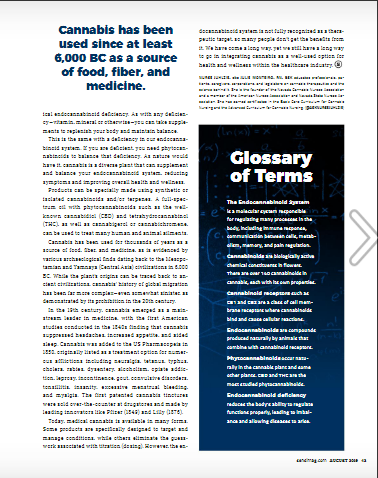
September 27, 2025 By: Julie Monteiro, RN, BSK, Vice President, Stormy Ray Cardholders’ Foundation and Co-Founder of the National Coalition for Patient Rights (https://coalitionforpatientrights.org). Original Publishing Date: 08/2019 Sensi Las Vegas Cover Article By Ask Nurse Juhlzie, the full un-edited article is posted below via photos of the Sensi Magazine cover and article in the reference section below.
How the eCS is the most Underused Tool in Optimizing Wellness
Cannabis Used as Medicine for over 5000 Years
Cannabis has been widely used for thousands of years, as a single resource for food, fiber and medicine,
as is evidenced by various archaeological finds dating back to the Mesopotamian and Yamnaya (Central
Asia) civilizations: more than 6,000BC. While the plant’s origins can be traced back to the ancient
civilizations, cannabis’ history of global migration has been far more complex, even somewhat sinister – as demonstrated by its most recent prohibition.
By the 19th Century, cannabis emerged as a mainstream leader in medicine, with the first American studies being conducted in the 1840s, which found that cannabis suppressed headaches, increased appetite, and aided sleep. Cannabis was added to the US Pharmacopeia in 1850, and originally listed as a treatment option for numerous afflictions including: neuralgia, tetanus, typhus, cholera, rabies, dysentery, alcoholism, opiate addiction, leprosy, incontinence, gout, convulsive disorders, tonsillitis, insanity, excessive menstrual bleeding, and myalgia, amongst others. The first patented cannabis tinctures were sold over-the-counter at drugstores, where leading innovators like; Pfizer (1849) and Lilly (1876) viewed health and wellness as booming and thriving.
Your Body is Hard Wired for the eCS
The simplest way to describe the Endocannabinoid System (eCS) is to equate it to the body’s harmonic
balancing system. In reality, the eCS is more like a conductor, directing a symphonic masterpiece, where
all the organs in the body are instruments, playing the song of life. Our body naturally produces;
Anandamide, 2-arachidonoylglycerol, Fatty Acid Amide Hydrolase, among other compounds that naturally bind and interact with our eCS, through cannabinoid (CB) receptors while promoting and maintaining balance in homeostasis. Each organ, as well as most cells in your body, have CB receptor sites, that fit perfectly with our Endo-Cannabinoids. Depending on the CB receptor site, and the cannabinoids, the outcomes can literally mean the difference between life and death. Considering cases of many cancerous tumors, binding to the CB1 generally induces apoptosis, or cell death, while binding to the CB2 generally induces cell autophagy, or new cell birth.
What makes the eCS so underused is that scientists and clinicians have long had the ability to target,
supplement and manipulate the eCS using plants, more specifically phytocannabinoids. Additionally,
extensive research has shown, it’s not just those found in cannabis, it’s just that cannabis has the highest
concentration of phytocannabinoids out of any other single species in the Cannabaceae and works
extremely well. When we are Cannabinoid deficient, we become sick and\or develop genetic mutations that cause imbalances in our bodies, which are known as Clinical Endocannabinoid Deficiencies.
As with any deficiency, vitamin, mineral or otherwise, you take nutrients, supplements and vitamins (i.e.
Coenzyme Q10, Potassium, Vitamin C) to replenish your body and maintain balance. This is the same with a deficiency in our eCS. If we are deficient, then we must consume phytocannabinoids to balance that deficiency. As nature would have it, cannabis is a very diverse plant offering us a variety of ways to
supplement, balance and stimulate our eCS, reducing symptoms and improving overall health and
wellness.
Your body is hardwired for the eCS.
The eCS is not used enough (Underused as a therapeutic target), so that people do not get all the benefits that they could.
Furthermore, unless the finished product is specifically made using synthetic or isolated cannabinoids,
terpenes or such as; Cannabidiol (CBD), Cannabigerol (CBG), Cannabichromene (CBC) or Tetrahydrocannabinol (THC), it is most likely made using a full-spectrum oil up of botanical compounds
known as ‘Phyto-cannabinoids’ used to treat a number of human and animal ailments.
Today, our medical cannabis is available to us in many forms, some products are even specifically-
designed to cure and\or target and\or manage conditions – while others eliminate guesswork associated
with titration (dosing). We have come a long way yet we still have a long way to go in integrating cannabis as a well-used option for health and wellness within the healthcare industry.
Definitions:
eCS- The Endocannabinoid System is a molecular system responsible for regulating and balancing many
processes in the body, including immune response, communication between cells, appetite and
metabolism, memory, pain regulation, and more.
Cannabinoids- naturally-occurring, biologically active, chemical constituents in flowers. There are over
140+ Cannabinoids in Cannabis. Most Popular: CBG, THC, CBD, CBC, THCV, CBN
Endocannabinoids- produced naturally in the body by animals
Phytocannabinoids- occur naturally in the cannabis plant and some other plants (CBD/THC are the most
studied phytocannabinoids)
Cannabinoid Receptors (CB1/CB2)- a class of cell membrane receptors in the G protein-coupled receptor (GPCRs) superfamily. Place where cannabinoids fit into.
Endocannabinoid Deficiency- the body’s inability to regulate functions properly and the body becomes
unbalanced, allowing diseases to arise.
Resources
- Did ancient Mesopotamians get high? Near Eastern rituals may have included opium, cannabis By: Andrew Lawler https://www.sciencemag.org/news/2018/04/did-ancient-mesopotamians-get-high-near-eastern-rituals-may-have-included-opium
- Medicinal Cannabis: History, Pharmacology, And Implications for the Acute Care Setting
https://www.ncbi.nlm.nih.gov/pmc/articles/PMC5312634/ - PubMed: Review of the neurological benefits of phytocannabinoids
https://www.ncbi.nlm.nih.gov/pubmed/29770251 - US Pharmacopoeia 1851 (3rd Ed): First Mention of Cannabis
http://antiquecannabisbook.com/Appendix/AppendixC.htm - PBS: Marijuana Timeline https://www.pbs.org/wgbh/pages/frontline/shows/dope/etc/cron.html
- Drug Library: Marijuana- The First Twelve Thousand Years
http://druglibrary.org/schaffer/hemp/history/first12000/abel.htm - Cannabis, Cannabinoid Receptors, and Endocannabinoid System: Yesterday, Today, and Tomorrow
https://www.nature.com/articles/s41401-019-0210-3 - Review of the Neurological Benefits of Phytocannabinoids
https://www.ncbi.nlm.nih.gov/pubmed/29770251 - The Endocannabinoid System as an Emerging Target of Pharmacotherapy
https://www.ncbi.nlm.nih.gov/pmc/articles/PMC2241751/
Photos of original article in Sensi Magazine Las Vegas, a now-defunct market of the reformatted brand.


About the Author
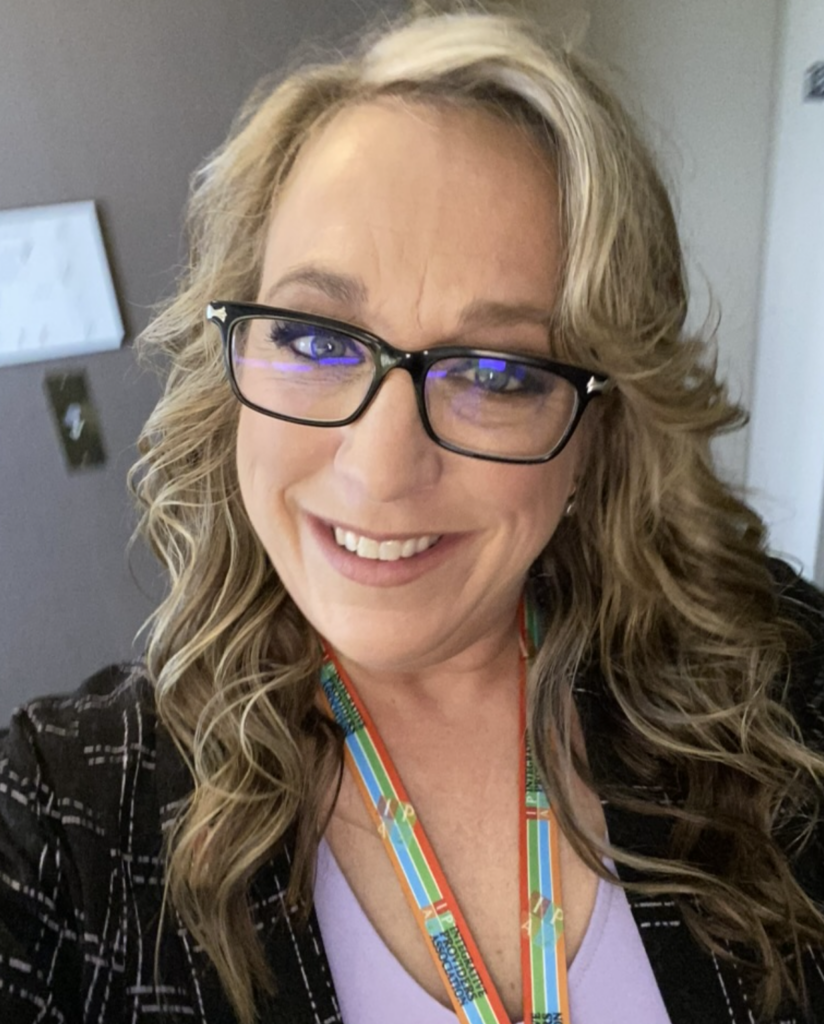
About the Author: Julie Monteiro, RN, BSK—also known as Nurse Julie Creel and the voice behind Ask Nurse Juhlzie—is a nationally recognized nursing leader, educator, and patient advocate whose work has helped define cannabis nursing as a professional discipline.
She serves as Vice President of Professional Education for the Stormy Ray Cardholders’ Foundation and as Co-Founder, President & Secretary Emerita, and current Vice President of the National Coalition for Patient Rights. Widely regarded as a pioneer in the field, Nurse Juhlzie was instrumental in establishing the Cannabis Nurses Network (CNN), Cannabis Nursing Magazine, the Integrative Providers Association (IPA), and the Glocal Cannabis Nursing Institute (GCNI) under the Center for Incubation & Findings Research (CIFR)—an extension of Compassion Center, the oldest federally recognized nonprofit medical cannabis clinic in continuous operation.
Nurse Juhlzie is also recognized for helping advance cannabis nursing within mainstream healthcare, helping integrate the discipline with the American Nurses Association (ANA) via a collaboration with leadership from the American Cannabis Nursing Association (ACNA) serving via her various roles.
During her tenure as President of Compassion Center, she continues to play a critical role in expanding and strengthening state-level medical cannabis programs nationwide, helping shape patient-centered policy reforms while leading Compassion Center’s clinical and advocacy expansion to serve patients across more than 18 states.