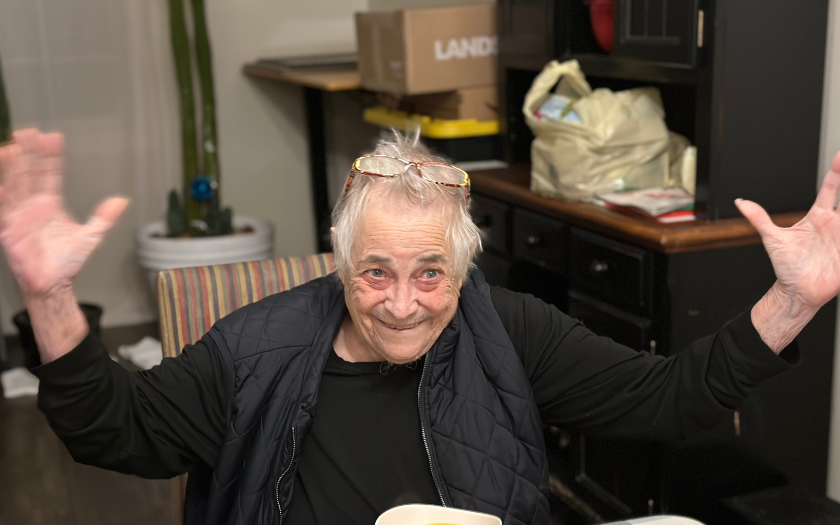
By James “J.B.” Creel, PgM, Board Secretary of the Stormy Ray Cardholders’ Foundation and Vice President of Research & Development for the Cannalogix Foundation Research Institute.
When Compassion Came with Handcuffs
There was a time in Oregon not so long ago when being a medical cannabis patient in Oregon meant that you were living with a variety of targets on your back.
The laws said you were legal.
But the system said, prove it.
If you were stopped in public with your medicine—even if you were fully compliant—you bore the burden of proof. Since 90% of the law is up to the interpretation of the officer enforcing the law, there were a lot of unnecessary arrests, way too many unnecessary tows and impounds, and way too many kids ripped from their families. Fact is, back then you were guilty until you could demonstrate otherwise beyond a shadow of a doubt, and don’t forget, you were going through all this while you were sick. Your medicine would be seized. Your name would be run. Your record would be scrutinized regardless of your medical condition or health histories. And if you were even slightly outside of any one or more legal or technical interpretations of the law or possession limits, you weren’t just facing citations—you were facing a felony, or a series of other charges that required you to put more of your non-existent energy into fighting for your rights and reputation. The advocates at the Stormy Ray Cardholders’ Foundation really did work overtime, all the time, because the Oregon Medical Marijuana Program would quickly tell everyone that they were simply a registry and would send them to the SRCF because Stormy Ray basically built the law.
That was the quiet truth: for patients, cannabis wasn’t just their medicine. It was a civil liberties gamble.
The statute limited what patients could possess at any given time to a fraction of what a plant actually produced. Imagine harvesting a crop that could sometimes yield pounds, but only being allowed to keep a few ounces. Where was the rest supposed to go? Who was responsible for the legal gray area between biology and bureaucracy? The SRCF mediated more disputes between growers and patients than one could conceivably comprehend and if you ask Stormy Ray directly she may say thats an understatement.
Patients were left holding the bag, and the burden of proof.
And when you are one law enforcement interaction away from an unnecessary or unconstitutional arrest, that isn’t healthcare. That’s conditional freedom.

The Inconvenience of Being Legal
Medical cannabis patients lived under a paradox:
- You were allowed to grow and use cannabis for your condition, and share your excess with other registered patients but you could not get any sort of pay back or trade for any of it whatsoever.
- But leaving it in the trash makes you a target with highly undesirable individuals, and getting caught transporting it to the local dump could land you in handcuffs if you were stopped along the way.
- Growing it was lawful as long as you were within your total plant numbers per grower and the plants and grow site were properly secured and identified as to who the patient and grower were and what the expiration dates of their various cards were. Each patient can still produce up to 6 mature plants in Oregon, while any grower who produces for more than two patients must register for tracking too.
- But possessing, and depending on the methods sometimes processing, what the plants had yielded could be considered criminal if the situation was misinterpreted by a law enforcement officer.
It was a system built on technical compliance traps.
For many patients, choosing cannabis meant forfeiting their rights and peace of mind. It also meant that choosing that medicine risked their custody battles, employment, housing, and in some cases, firearms rights. It meant explaining yourself to officers, to judges, to skeptical prosecutors—often while sick too.
The law existed on paper.
Protection did not always exist in practice.

When the Movement Failed to Move
In the early 2000s, a consortium of Oregon cannabis organizations had an opportunity to implement reforms that would have stabilized and modernized the program. They failed to act.
The result? Patients continued operating under a structure that imposed felony exposure by default.
Then, in 2005, something changed.
SB-1085: A Structural Correction
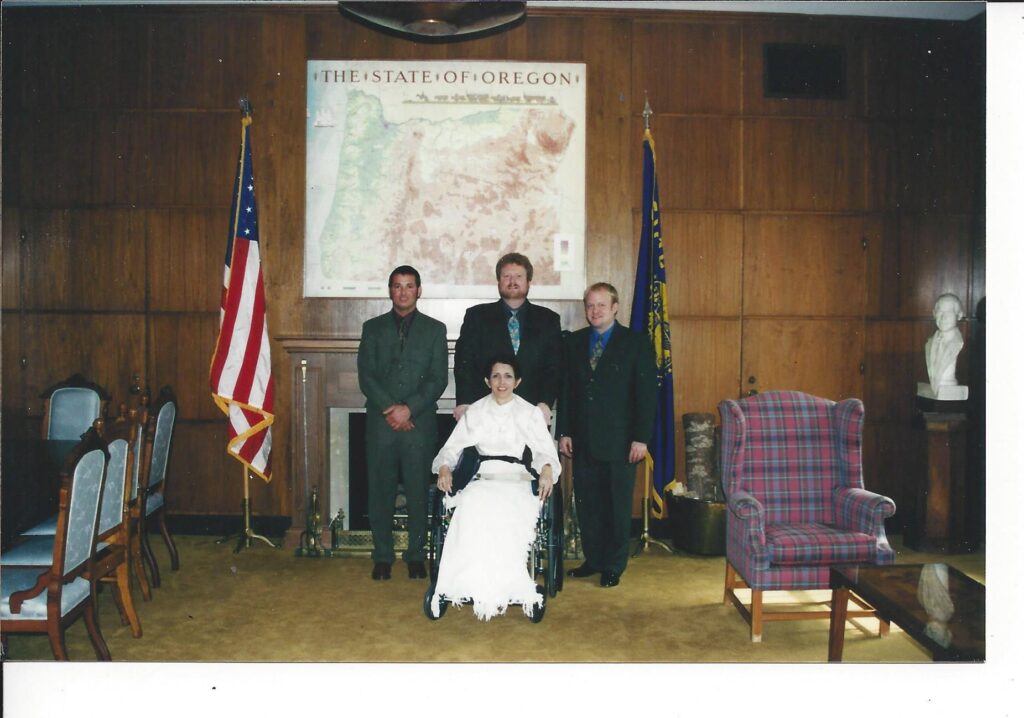
Under the leadership of Stormy Ray and Jerry Wade, with the help of influencial voices, scientists and the support of districts attorneys and the justice system, the Stormy Ray Cardholders’ Foundation and its team of advocates shepherded in SB-1085 all the way through the Oregon legislative process.
It wasn’t cosmetic reform either. It was structural.
SB-1085 introduced:
- OMMP registry identification clarity that administrators and law enforcement continue to use today.
- Expanded patient protections that have been modified time and time again to align with Measure 91.
- More coherent possession frameworks that have continued to be defended almost every Legislative session since.
- Operational administration models that have been copied, pasted, rinsed and repeated across the U.S. through a framework of related organizations and advocates.
- A 24/7 verification hotline that simultaneously protected patient rights, property and ultimately patient privacy
But more importantly, it created something that would ripple far beyond Oregon:
A working example.
Oregon became a proof-of-concept state. A living blueprint. Other legislatures, regulators, and advocates studied the program. The OMMP has had more copy cats than Hello Kitty and I am here for it. For a time, the OMMP was widely regarded as “the best medical cannabis model” in the country—not because it was perfect, but because it functioned and the systems were safe.
It demonstrated that patient protection and regulatory order were not mutually exclusive.
By-Example Leadership
The Foundation didn’t just advocate—it administered.
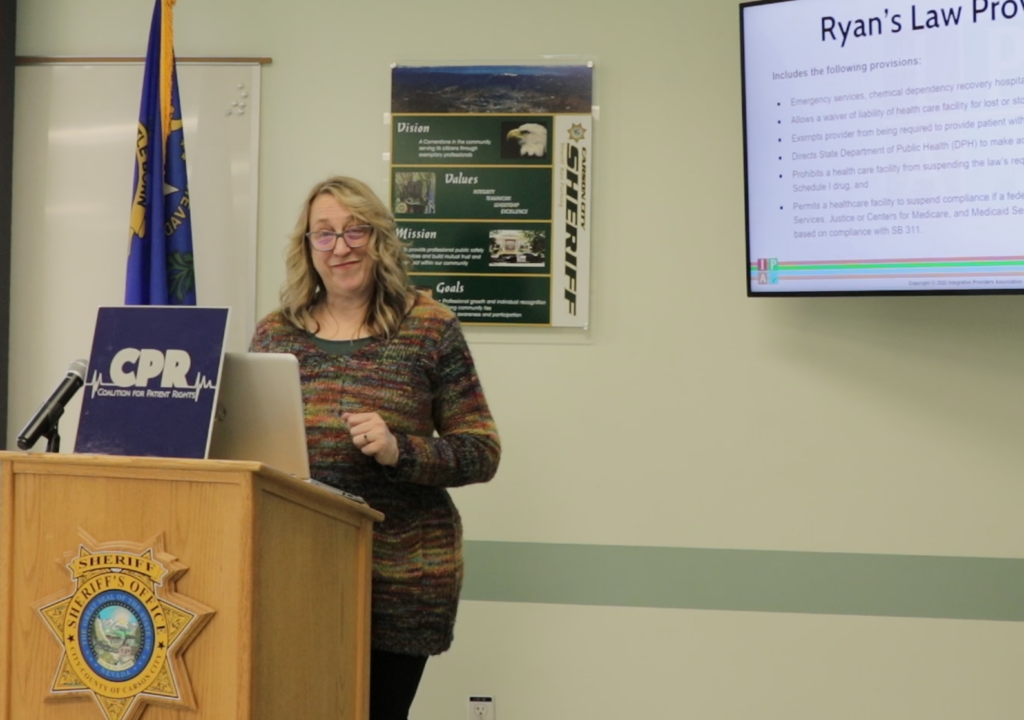
Through operational oversight, compliance training, and cultivation standards, leaders such as Stormy Ray, Jerry Wade, Richard Grant, Elizabeth Guilfoy, Ann Tate Thatcher, Rod Hagen and James “J.B.” Creel worked tirelessly with leadership across the land to help shape a patient-friendly ecosystems that have worked to protect patient rights and access at a time when every venture capitalist and brand that you can think of is pawing for a basis point of a market share that never belonged to them in the first place.
The Cannalogix Foundation Research Institute (CFRI), operating as an extension of the SRCF, trained and seeded premium growers rapidly and efficiently. Data-driven cultivation, compliance-first systems, cGMP standards development, patient centric formulations and disciplined saturation strategies ensured that the Oregon patient supply remained stable and affordable when growers were still commanding $400 an ounce for premium medicine when their $100 ounces barely competed with my highschool brick weed.
It wasn’t perfect. It wasn’t chaos.
It was organized access. It was legal.
And patients benefitted.
Measure 91: The Promise and the Pivot
Then came Measure 91 in 2014.
The pitch, presented as homegrown by Oregon industry insiders but quietly driven by outside interests migrating from outside of Oregon, was irresistible:
- Universal legalization
- Economic opportunity
- Expanded access
- Tax revenue windfalls
And voters approved it.
But the shift from patient-centered structure to adult-use commercialization fundamentally altered the landscape. First thing was first, Oregon’s Board of Pharmacy was no longer considering cannabis as a Controlled Substances Act (CSA) Schedule II and doctors, pharmacists and hospitals were no longer able to protect their providers while patients exercised their rights to use cannabis while in inpatient care.
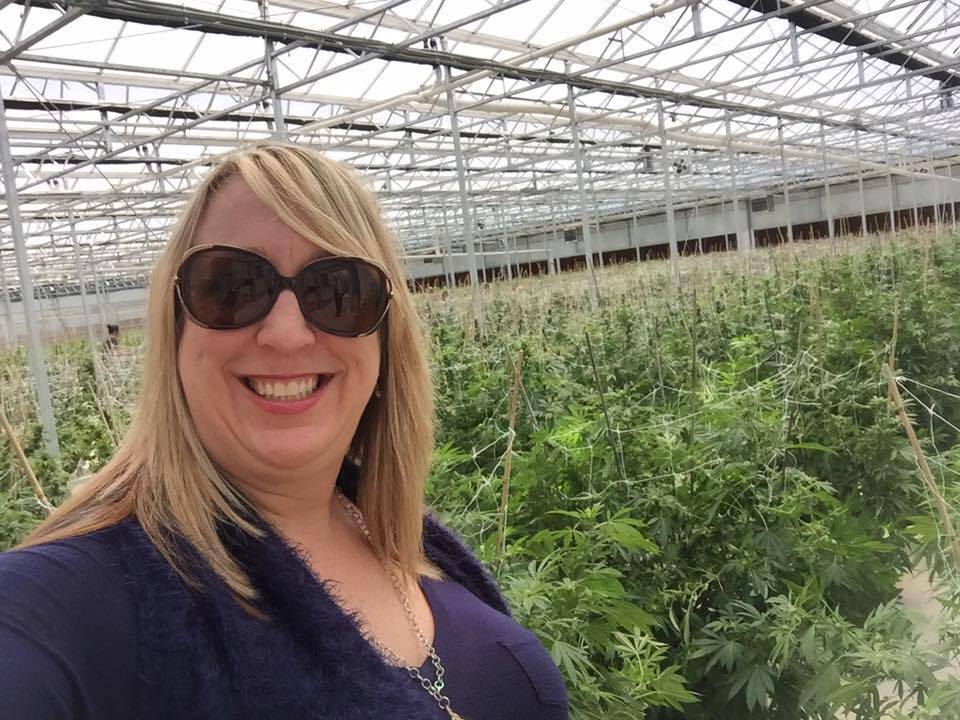
Second casualty were the family farms—many of which had grown quietly and compliantly for years while they truly improved the lives of patients— they found themselves competing against capitalized entities backed by investment bankers and speculative money. Consolidations followed. Saturation intensified. Regulatory costs climbed. Many really amazing people were permanently sidelined because of difficulty regarding bankruptcy laws and the business of manufacturing a schedule I drug, more on that later. For the case of this article, the family farms were either lost or heavily damaged by still-unfulfilled promises.
Homes and legacy farms forever changed hands. Genetics have been lost, or permanently altered, wiping years upon years of work away just because somebody wanted to try and make some cash.
Meanwhile, the promises of universal prosperity have remained uneven at best. While I am sure that a deep dive and meta data analysis may expose wide cracks in the system, and a signal that even I don’t want to acknowledge, there seems to be less than 3% of the original players under the same ownership and leadership structures that they started out in ten to twelve years ago, but more on that later, too.

The Paradox of the $12 Ounce
Today, in the most saturated cannabis market in the world, Oregon, a patient can walk into a dispensary and purchase a $12 ounce of premium cannabis tax-free.
That price isn’t magic.
It is the result of:
- Relentless data crunching
- Aggressive production scaling
- Rapid grower training
- Market compression
- Oversupply economics
But here is the question that remains unanswered:
If the market is this saturated—
If production capacity is this high—
If wholesale prices have collapsed—
Why do patients still report barriers to access?
Affordability should not fluctuate with investor cycles.
Medical necessity does not operate on quarterly earnings.
Patients will always have a demanding need for affordable access—now, not later. And in a market this saturated, there is no defensible excuse for systemic gaps.

The War That Never Really Ended
The “War on Drugs” may have softened rhetorically.
But for patients, the war simply changed uniforms.
First it was criminalization. Then came unspoken stigmas when people smelled a hint of cannabis on you.
Then it was compliance traps.
Now it is market displacement and structural neglect. People taking prophylactic measures to treat your medicine before it goes to testing regardless if it needs it or not, think about that, chemicals, irradiation and fungicides just because the cost of a second test will lower the margins and this is cheap insurance.
The battlefield moved—from courtrooms to boardrooms to the veg and bloom rooms—but patients are still navigating the fallout.

Gratitude Where It’s Due
Through every phase of this saga, three institutions consistently took the logical lead:
- Stormy Ray Cardholders’ Foundation
- Cannalogix Foundation Research Institute
- Compassion Center
They built infrastructure when others debated theory.
They implemented programs when others drafted slogans.
They served patients while others positioned themselves for market entry.
That kind of leadership matters.
And history will remember who stood where.

About the Author
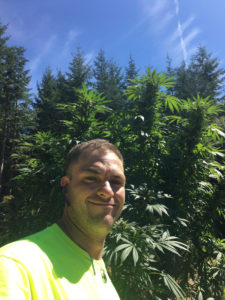
James “J.B.” Creel entered the medical cannabis space in 1999 as his mother’s caregiver and assistant at a time when participation in the medical cannabis program carried real personal and professional risk. Being a contractor and former counterintelligence analyst, and communications tech with a background in law enforcement didn’t help him make very many friends as it made him a target for both sides. His mother, Elizabeth W. Guilfoy, a former director of Research and Development and Quality Control for DuPont, also served as an advocate for the Stormy Ray Cardholders’ Foundation (SRCF) and later on Chief Research Officer and Founding Fellow of the Cannalogix Foundation Research Institute (CFRI) which is where she served until her retirement. Beginning as a volunteer with the SRCF, Creel has rose through the ranks serving as:
- Board Proxy for Elizabeth W. Guilfoy
- Law Enforcement Liaison
- Compliance Officer
- Compliance Manager
- Research Institute Lead
- Board Secretary (Current Role)
Today, Creel serves as Board Secretary, overseeing SRCF administrative operations and day-to-day compliance for both the Foundation and its research arm. In addition to his SRCF duties, Creel serves as the Board Secretary-Treasurer for the Compassion Center, the Integrative Providers Association, and the National Coalition for Patient Rights; and Research Administrator for the Center for Incubation & Findings Research (CIFR), which manages and oversees the Community Based Clinical Cannabis Evaluation & Research Network (CBCCERN) (www.CBCCERN.org), an autonomous research institute and network of principal investigators and clinics including Compassion Center and its division, Integrative ECS. With a professional career of thirty five years and a background spanning both counter-intel investigations and investigative research, Creel thrived in compliance management, and legislative advocacy, where he has spent well over two decades working at the intersection of patient protections, regulatory systems, and structural reform without a need to make friends nor maintain any sort of financial reliance on any of it.
His perspective is informed not only by policy—but by field experience.
And the saga, as history shows, is not over.